For serious collectors, relying on outdated spreadsheets or manual eBay sold listings isn't just slow—it costs money. In a market as volatile as the One Piece Card Game (OPTCG), prices for meta-relevant cards or high-end Alternate Arts can spike overnight.
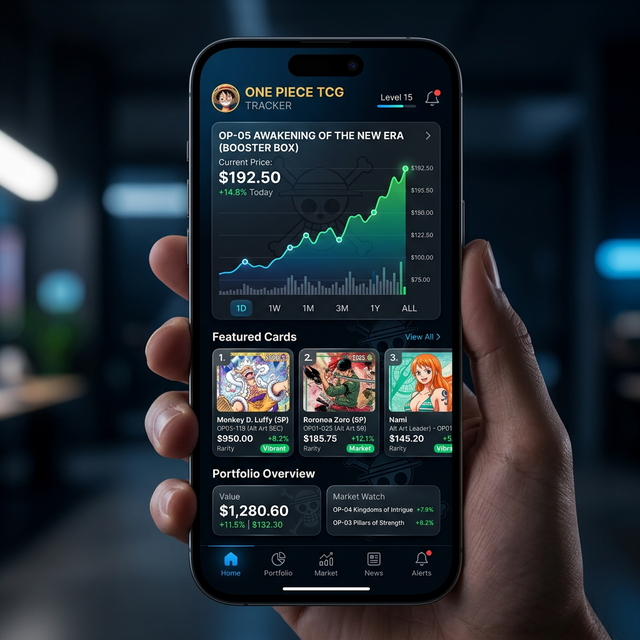
A dedicated one piece card value checker bridges the gap between raw data and actionable portfolio management. It allows you to track your exact printings against live market averages and monitor your one piece card game price history effortlessly.
Why Manual Tracking Fails During Buyouts
The OPTCG market often experiences sudden buyouts. If you're tracking a binder of 500+ cards manually without a reliable one piece card value checker, you won't realize a $5 card has spiked to $40 until the trend is already over.
Using an automated value checker immediately flags these price movements in your portfolio, letting you decide whether to hold, grade, or liquidate into cash or trades while the hype is at its absolute peak.
Verifying Printings: Pre-Release vs Standard
A simple price number means nothing without context. Consider OP01-120 Shanks: The base Secret Rare, the Alternate Art, the Manga Rare, and the gold-stamped Winner Promo all have completely distinct market trajectories.
A proper one piece card value checker forces you to input the exact set code and variant. This prevents the classic mistake of mispricing a High-End Tournament Promo as a standard booster pull.
Tracking Graded vs Raw Card Value
As the One Piece TCG matures, the premium on PSA 10 and BGS 9.5/10/Black Label cards is widening. However, grading a card costs time and money. Knowing precisely what the raw "Near Mint" market price is versus the graded premium is critical.
By watching the raw one piece card game price stabilize, you can make informed decisions on whether an Alternate Art Leader is worth the $25+ grading fee.
Building a Liquid Collector Portfolio
The most successful collectors treat their binders like a liquid portfolio. By having Kaizoku constantly track the real-time value of your playsets and chase cards, you always know exactly how much "trade equity" you have.
Your one piece card value checker should be the source of truth that lets you negotiate trades confidently, knowing exactly what both sides of the table are worth down to the dollar.